
Authors: Tim Foster, Rob Hope, Cliff Nyaga, Johanna Koehler, Jacob Katuva, Patrick Thomson, Nancy Gladstone
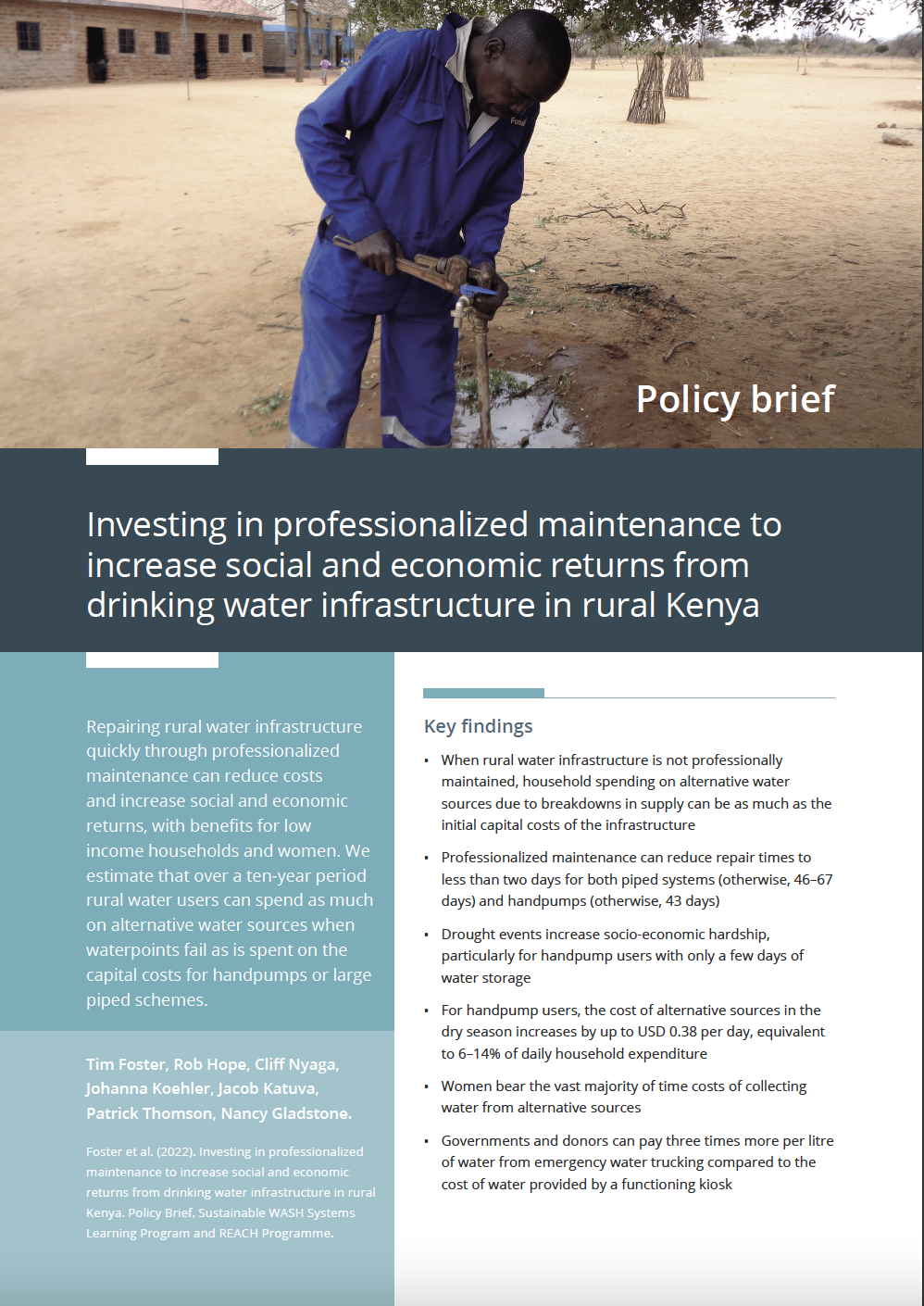
Repairing rural water infrastructure quickly through professionalized maintenance can reduce costs and increase social and economic returns, with benefits for low income households and women. We estimate that over a ten-year period rural water users can spend as much on alternative water sources when waterpoints fail as is spent on the capital costs for handpumps or large piped schemes.
This policy brief examines the case of water supply infrastructure in rural Kenya, and finds the case for investment in improved maintenance becomes compelling when factoring in wider social and economic returns, though will require major institutional change and accountable coordination between government, donors, and NGOs.